expanding the canon through diverse music publishing
dulcamara press
This is an anti-capitalist venture.
Rejecting capitalist goals and methods, we are a care-centered community of composers/creators, scholars, and performers. Humane work should foster creativity and artistic growth while acknowledging and protecting human needs and limitations. We share both the burdens and the rewards of artistic labor.
- We publish music by historically underrepresented and marginalized composers and aim to increase access to their work.
- We produce and sell high-quality, sturdy, bound editions that are beautifully designed, well-researched, and can last forever.
- We are a labor collective.
- profit is distributed equally between composers and/or scholarly editors and the press
- contractors are paid up-front a fair compensation for their labor
- press revenue is poured back into research, publishing, and projects that further our goal to expand the canon of classical/art music and uplift the voices of the marginalized and underrepresented.
The foundational myths of capitalist thinking need to be challenged in order to make creative idealism a reality.
Communities are strengthened by mutual support, not competition. We strive to build a community where artists are connected through mutual care and supported by each other so that we can all keep making art, engaging in scholarship, and prioritizing the work of marginalized and underrepresented composers past and present.
Read a personal essay by our founder about Dulcamara's journey to becoming a collective.
This is not a business.
About a year after I started Dulcamara Press, I scheduled a meeting with an advisor from the local women’s business development council. I was hoping for advice on securing more funding to expand.
Prior to our meeting, I was excited and energized by Dulcamara’s success. In less than a year we were self-sustaining. Each new edition was funded by sales from previous editions and I was even able to travel to industry events to show off our work, make connections with interested folk, and draw attention to our project. We had good relations with two major institutional distributors and our editions were being purchased by university and arts libraries around the globe. Whenever I spoke to folks about the press, I was met with enthusiasm for the project, and when I presented our editions in person, they were universally praised for their beauty, sturdiness, and the clarity of the notation.
I knew we were doing good work and I was proud of our progress and ready to expand. I figured that I was ready to increase my output and that I could reasonably put out 3-5 editions each month, especially if I could afford to hire somebody else to do social media marketing (the thing that took the most extra time and that I found to be particularly draining). Since we had generally been making a profit on every new edition just by virtue of our standing orders, I felt sure that an increase in productivity would amount to a huge increase in revenue flow, exposure, and brand recognition.
At my meeting with the business advisor, I explained all of this and was effusive about the press’s success and my future plans for it. This was the same advisor whose enthusiasm for the project when we first met a year earlier had bolstered my confidence to start. This time she was stony-faced. She listened silently, then asked “But how much are you paying yourself?”
“Well…nothing yet, but the press is completely self-sustaining,” I insisted, “and with some funding to expand, I’m sure that the increase in revenue would allow me to start giving myself a modest salary, enough to be able to keep going, at least.”
“So you haven’t paid yourself anything and it’s been a year?” She looked appalled
“I mean… no? I didn’t really expect to pay myself until it was off the ground, and now it is and we can expand and…”
She cut me off. “That’s not a business. What have you been living on?”
I explained that I had used up my personal savings on startup and that my spouse was covering household expenses. I didn’t mention that I was also beginning to sink under credit card debt because–despite living very frugally–my spouse’s schoolteacher salary was not really enough to cover it.
She shook her head, cutting me off– “that’s completely unsustainable. If this was a success, you would be making enough to pay yourself, not just cover your expenses.” She wasn’t being unkind, and her face softened. “This really isn’t a business.”
She was right. This isn’t a business. Not really.
My goal has never been to get rich, I just wanted to do the work. And I could not argue that there was any profit-motive that would turn Dulcamara into a money-maker, not without changing our core tenets. I was passionate about doing right by the composers and scholars who entrusted their works to my care, and I was never going to budge on splitting profits equally (a pay standard that, as far as I know, no other commercial press uses).
I was also delighted that our main clientele were academic and arts libraries where students and scholars with limited income might discover these pieces of music and–just like I did countless times while in graduate school–head immediately to the scanner to copy the works for their own use. Legally our editions were copyrighted, but in my heart I was thrilled to know that scores of musicians would have access to these editions through their library and could find and fall in love with the music without being forced to buy them. I understood that the music would travel further and be played and heard more widely if it was freely available than if it was pay-to-play. My goals have always been at odds with commerce, so really, I shouldn’t have been surprised.
But it was a basic fact that my family could not afford for me to continue to work full time without pay. I would need to get a job, go back into the workforce and Dulcamara would have to become an evening/weekend passion project. I returned to work and dreams of expansion died.
Recognizing that I needed both practical help and access to funding that our reduced publishing schedule wouldn’t support, I tried to pivot into the non-profit sector. While I had been on non-profit boards before and had done some work for arts organizations, I was unprepared for the bureaucratic labyrinth of forms and documentation required just to file for nonprofit registration in this country. The task was even more onerous financially because transferring an existing commercial venture to nonprofit is much more expensive and time-consuming than starting a new organization from scratch. After assembling a board and drawing up required statements of mission and intent, divvying tasks among our board volunteers, running fundraising efforts, and finally sinking nearly a thousand dollars of the press’s limited savings into the nonprofit application fees, our application was denied.
I was disappointed, but again, not surprised. I received the denial letter about 9 months after filing, in the summer of 2025, when DOGE was axing through every publicly funded agency for research, arts, infrastructure, and social welfare. Particularly, anything related to DEI, racial equity, gender equity, LGBTQIA rights and protections, climate science, wealth disparity and poverty–basically any project that aimed to improve life for everyone–was slashed. I don’t know exactly why our application was denied, but I did know that the public grants I had hoped to apply for were no longer going to be available, whether we had obtained 501(c)3 status or not.
There are still plenty of private funders out there, and I have given thought to pursuing that avenue for support. I recognize that private foundations are the backbone of arts funding in the United States. They tend to be the only reason the vast majority of arts organizations exist and can continue to do their good and necessary work. I recognize the need for that funding source to exist and I readily acknowledge that I have benefitted both personally and professionally as a performer, composer, and musicologist, from private funding.
The vast majority of private funding comes through corporate and billionaire wealth. Capitalism undergirds every financial system currently in place and the charity sector is no exception. While humanitarian giving can be motivated by genuine altruism, too often corporate philanthropy serves as a means for the corporate donor to avoid taxation while dictating exactly how their tax-free donations are disbursed and who benefits from them. While I have deep respect for the many nonprofit organizations that exist by virtue of these donations and whose projects have lasting and positive impact, I have no interest in pursuing private funding in a capitalist system that is responsible for vastly more evil than good in this world.
So, this is not a business.
Dulcamara has essentially functioned as a commercial venture since founding in 2022. The press felt successful and I was proud of my work. My goals had been met: music by historically marginalized composers was being brought to light. Music by contemporary, living composers whose various identities can make access to publication, performance, and recognition more difficult were seeing their music published, performed, uplifted. Together we were sharing the revenue of our joint efforts. Our editions could be found in many of the top academic and arts libraries where they could be accessible to thousands of patrons every day. It was paying off: spiritually, emotionally, intellectually, musically. By all the truly important measures it was paying off. I was doing work that I felt passionate about and using skills that I had honed over decades. I had a community of fellow creatives and scholars beside me and we benefitted mutually from each others’ efforts. I knew that we were making something good.
But it wasn’t a business, because I wasn’t making any money. And at the end of the day, we all live in a system that exists explicitly to prevent us from living a life we can’t pay for, no matter if what we can’t pay for is a right and not a reward. Healthcare, housing, food, transportation, education, community, the dignity of doing work that we choose and doing it well? None of those are available in a capitalist system unless we “work for it”. But the work only counts if it serves the interests of the corporate and billionaire class.
And so, this isn’t a business. Nor is it a nonprofit in the legal, registered sense. What it is now may be hard to pin down, but my standards and priorities are not. This is an anti-capitalist venture. I hope for it to become a collective venture where both the labor and the fruits of that labor are shared equally by all the folks who choose to contribute their skills, talents, creativity, and time. Some things won’t change:
Dulcamara exists to publish music by the underrepresented and marginalized and to increase access to their work.
We produce and sell high-quality, sturdy, bound editions that are beautifully designed, well-researched, and can last forever.
We’ll always be a 50/50 profit sharing press and we’ll always pay contractors up-front a fair compensation for their labor.
But our approach and our processes are going to change. I reject the usual structure and goals of capitalism. I envision this as a care-centered community of composers/creators, scholars, and performers working in collaboration. Humane, care-centered work should foster creativity and artistic growth while acknowledging and protecting human needs and limitations. We don’t need to work on a fast-paced commercial timeline or toward capitalist goals. Love of the work is the purpose and we can share both the burdens and the rewards of artistic labor.
The goal isn’t to “make money”, and while everybody shares equally in what we produce, nobody is going to get rich. This has always been true, but now I’m saying it loud: money isn’t the point, and the reality is that none of us will ever earn enough to be financially supported by this.
Strict timelines are irrelevant. Projects can take as long as they need to. We can and will adjust our publication schedules to fit the needs of the people working on any given project. By the same token, if you or I feel like there’s a need for urgency, we can do our best to make space for hurrying some projects while slowing others. Maintaining flexibility in our timelines means we can all be honest about our needs, limitations, and the level of engagement that we are capable of at any given time.
By rejecting a capitalist structure, we strive to build a community where artists are connected through mutual care and supported by each other so that we can all keep making art, engaging in scholarship, and prioritizing the work of marginalized and underrepresented composers past and present.
This is a fight for dignity and for the right to make art without turning it into a side-hustle. Art doesn’t exist to make us money, it exists because we need it. We make art because we must. There is a deep, inherent violence to any system that reduces every human effort and skill to a dollar amount. Speaking only for myself, I can no longer make art within a system that commodifies my creativity, that reduces my voice, my years of practice and study to a product that can be bought and sold. I choose to believe that fostering care-centered, collaborative communities in which we can support and care for each other’s creative work is the best way to reclaim the joy, wonder, passion, pain, and beauty that is the core of any artistic labor.
One music collective isn’t going to answer the myriad deeply-entrenched problems we daily encounter. I can speak only for myself, but I feel empowered by possibility. In this one act of reclaiming my own artistic purpose and goals, I feel my hope expanding, pushing me to face every other challenge with renewed courage.
Read more about Dulcamara's founding, circa 2022.
The seeds of this project were sown some years ago while I was juggling a busy schedule as a professional performer and composer, pursuing graduate studies in musicology, all while continuing to work as a graphic designer and parent young children. It was hectic and stressful, but artistically and intellectually rich.
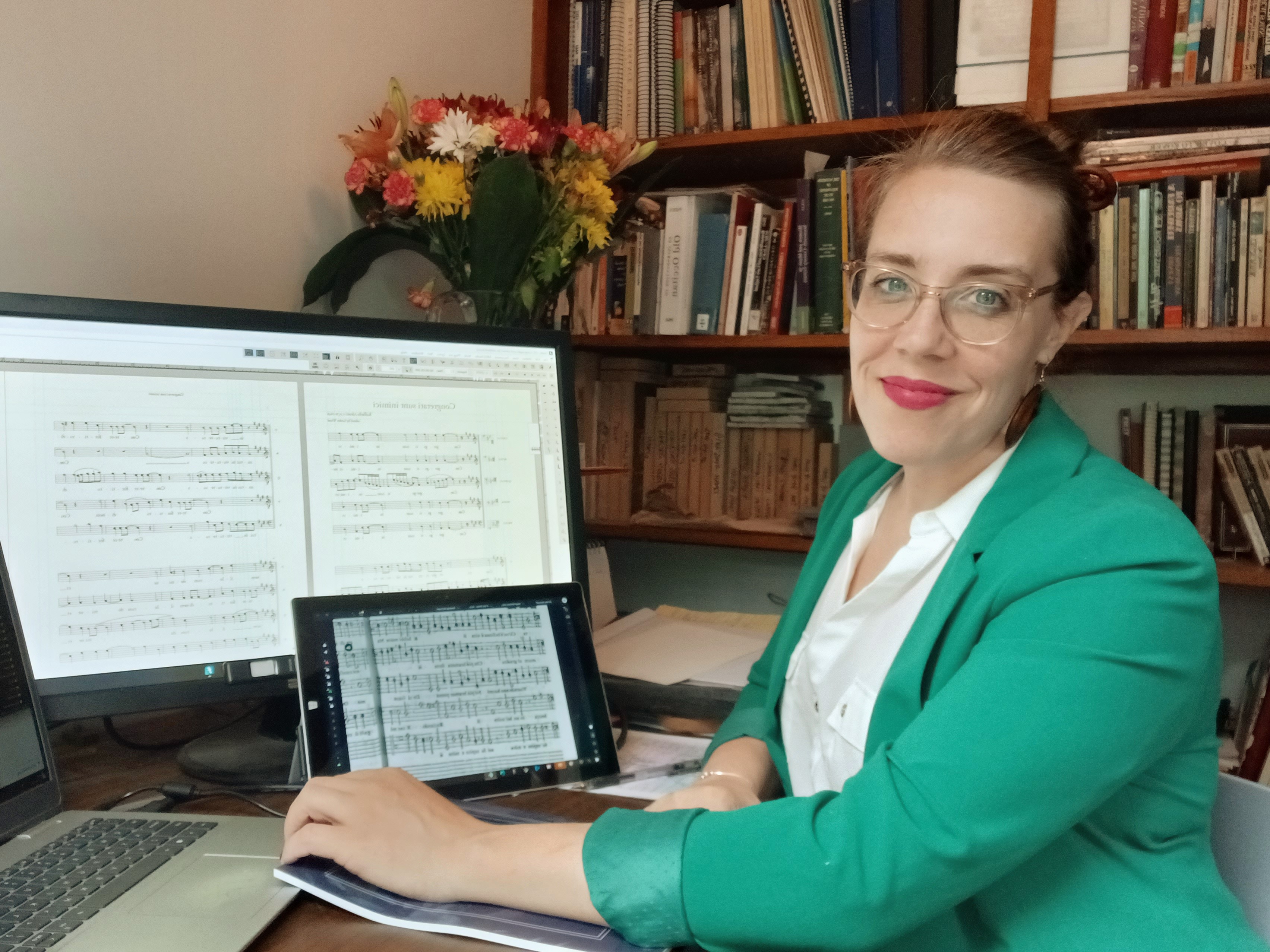
During that time, I founded and directed a vocal ensemble that specialized in the musical bookends of early and contemporary music. The most satisfying projects I undertook for that ensemble involved hunting through primary sources for music that had not been transcribed or performed publicly for many hundreds of years. The more I delved into the wealth of extant manuscripts and early printed musical sources, the more I realized how limited the available performance repertoire is.
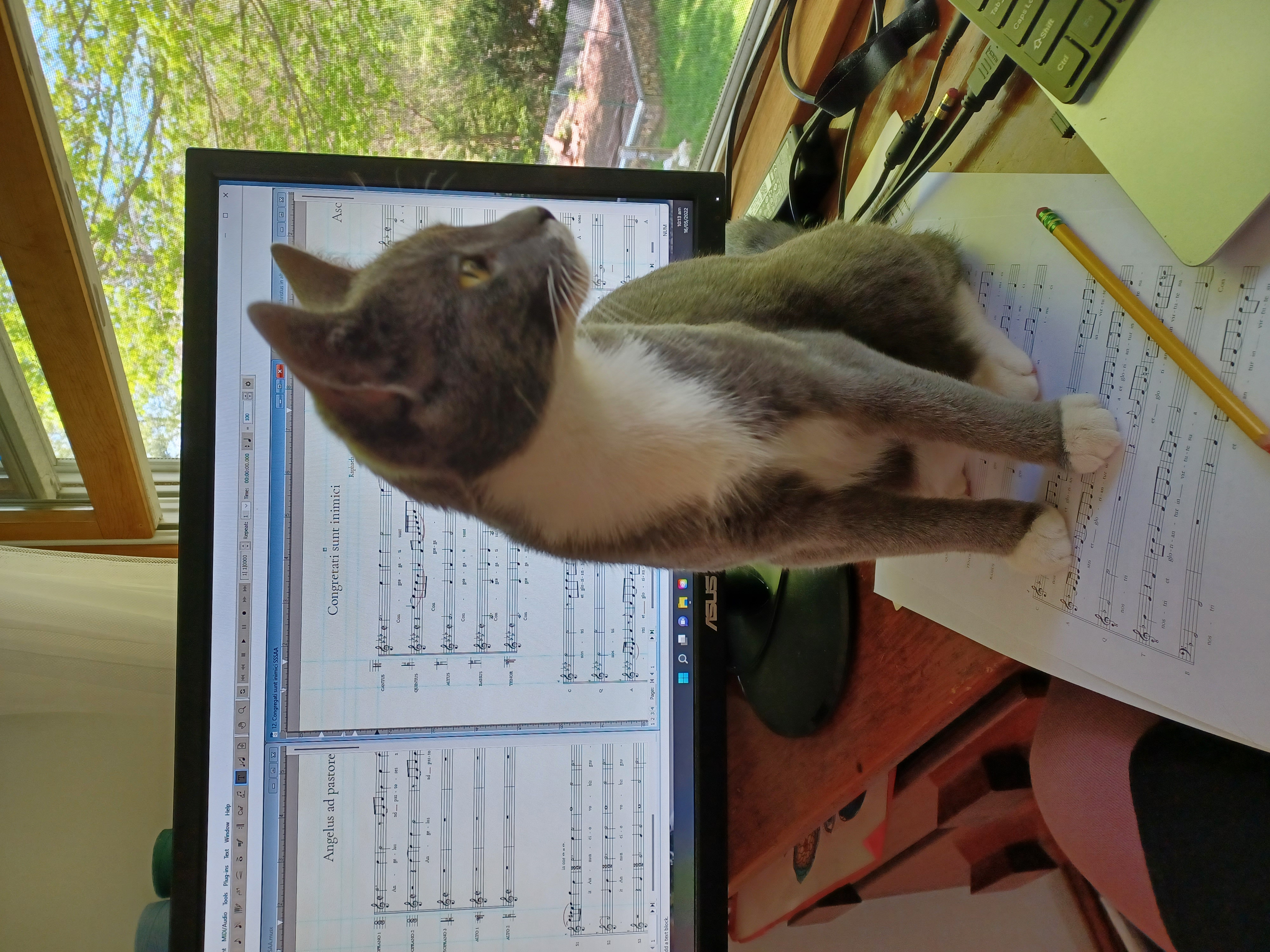
Most musicians have neither the time nor training to find, transcribe, edit, and produce new editions from primary sources, leaving thousands upon thousands of musical works forgotten and unheard. This is especially true of the medieval and early renaissance, but it also applies to the so-called “lesser” music of later periods, particularly music composed by women, whose place in society often limited their access to wide public performance, publication, and notoriety. Contemporary composers from marginalized communities fare somewhat better today than in the past, but barriers of race, class, gender, disability, and a myriad of other threads of identity still persist. As a composer and new music advocate myself, Dulcamara is my way to create a platform to provide publishing and distribution opportunities for contemporary composers.
I officially launched Dulcamara Press in April 2022, after a year of lockdown during which I, like many, reevaluated my priorities, goals, and the way I most wanted to spend this precious life. The covid pandemic forced us all to grapple with our collective community responsibilities and contributions, and to wrestle with our own daily lives and priorities. It lead many of us to finally do that thing that we’d been dreaming of (and perhaps putting off) for years. For me, that was Dulcamara Press.